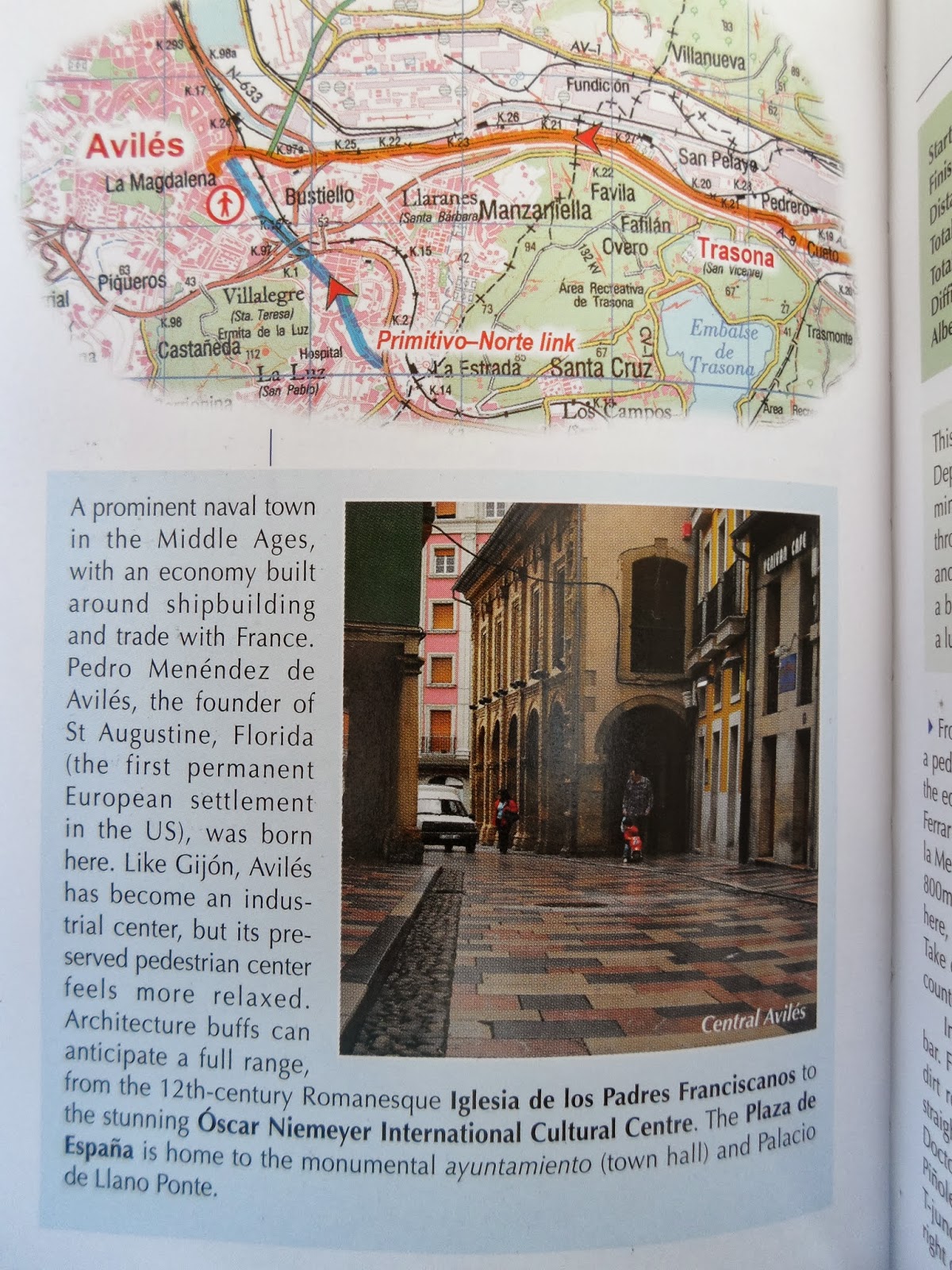
The coastal route of the Camino de Santiago (which is nearly as old as the Primitivo), runs right down my street, Calle Rivero. (I discovered this weekend that one of the two photos in my Northern Caminos guidebook for Avilés includes my apartment building.) So, I went to the pilgrim fountain and chapel just down the street and then set off on the Camino route to San Adriano (where I had gone to the fiesta of San Adriano on 8 September). From there, I broke off the Camino route and went past Mercedes' farm, Las Cepas, and to her village of Naveces, then to the Senda Norte trail at Santa Maria del Mar, to Arnao and on to Salinas (where I took a dip in the very cold and refreshing Atlantic and then sat on the beach in the sun), then along the dunes to San Xuan de Nieva (where the Aviles River meets the Cantabrian Sea) and then back, past Gauzón (where reputedly a castle stood in the 9th century at which the Victory Cross of Don Pelayo was gilded and bejeweled) and back to Avilés. 29km (almost 18 miles) total, on a hot, cloudless day. Magnificent. But I was starving and went straight to one of my favorite restaurants, El Nero ("The Nest" in Asturian), for a big plate of "cecina" - which essentially is cured ham from a cow - a basket of bread and a bit of Rioja.
The Calle Rivero pilgrim fountain and chapel.

A Camino marker on Calle La Ferrería.

A poorly-placed pedestrian crossing sign (nearing the outskirts of Avilés), but enough yellow arrow peeking out to keep the Way.

Much better.

Convent on the edge of Avilés.


Post-1960 Avilés. (I prefer my pre-1900 portion.)

Camino marker before San Cristóbal.

Maiz (that would be pronounced "m-eye-th" over here).

Camino marker in San Cristóbal.

They do love Covadonga. On a house in San Cristóbal.

La Playa de San Xuan de Nieva.

Salinas.
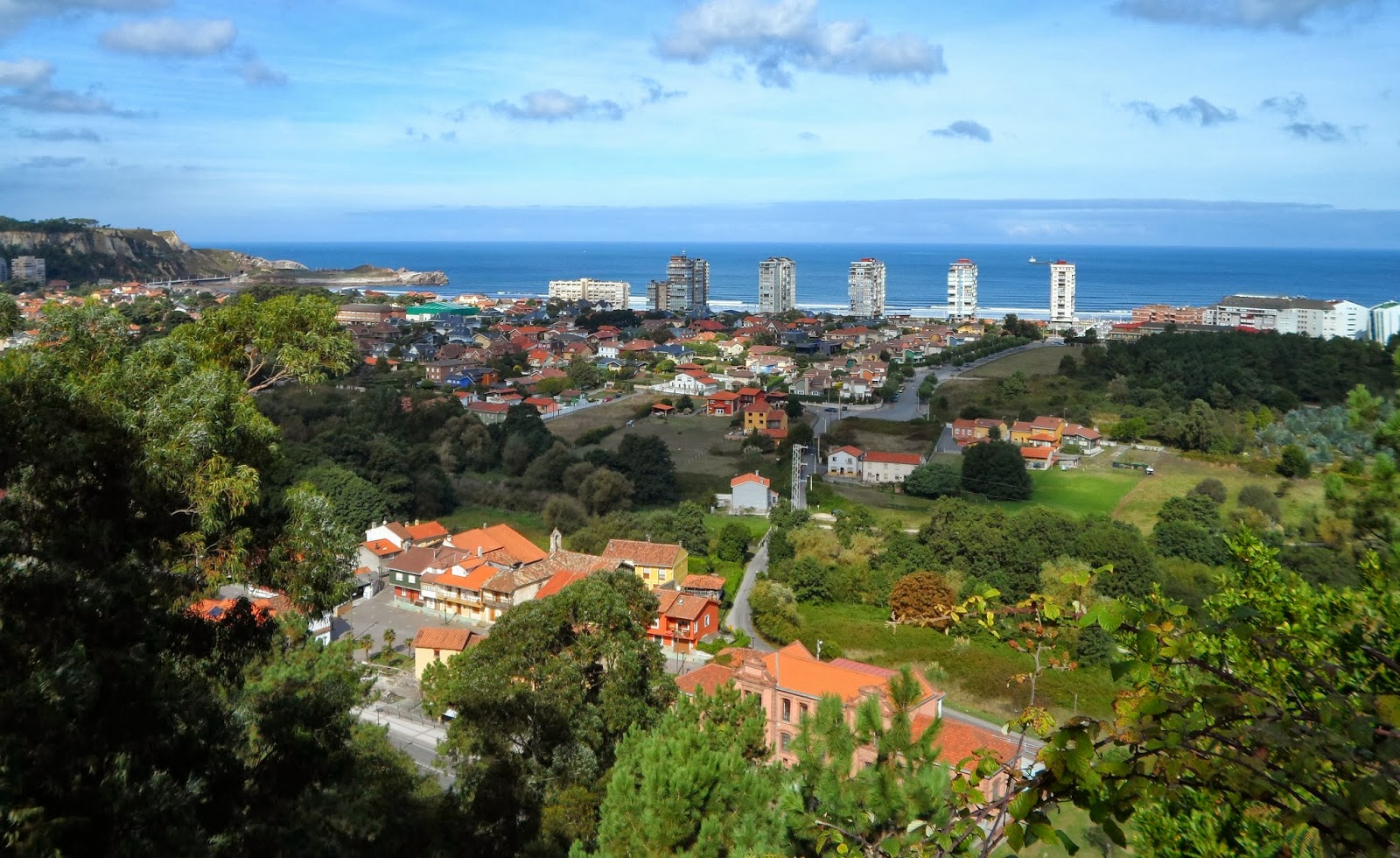
Gauzón.

When the castle was still there, in the 9th century, the Atlantic came to the foot of Gauzón.

A biker passed me on the trail through the eucalyptus grove, wending up and down into Salinas.

A Civil War bunker.

"Verza" - a green used in many Asturian and Galician dishes.

A villa near the beach in Salinas.

Monument to an early-20th century local official in Salinas.

La Playa de Salinas.

I discovered that my apartment building is in the guidebook when I checked it while sitting on the boardwalk in Salinas.
Museo de Aclas Philippe Cousteau in Salinas.

Pilgrim crucifix in the courtyard beside La Iglesia Parroquia Nuestra Señora del Carmen in Salinas.

La Iglesia Parroquia Nuestra Señora del Carmen.

Covadonga, on a school in Salinas.

La Iglesia de San Martín de Laspra. Antonio tells me it is the only church in Castrillón that was not gutted (with the contents all piled in the courtyard and burnt) by the leftist militia during the Civil War. Apparently, one of the soldiers knew of its historical significance and persuaded his commander not to destroy it.

The pre-Romanesque window is protected by plexiglass.


Camino marker in San Martín de Laspra.

The medieval city wall of San Martín de Laspra. With arrow slits.


An old pilgrim bath outside San Martín de Laspra.
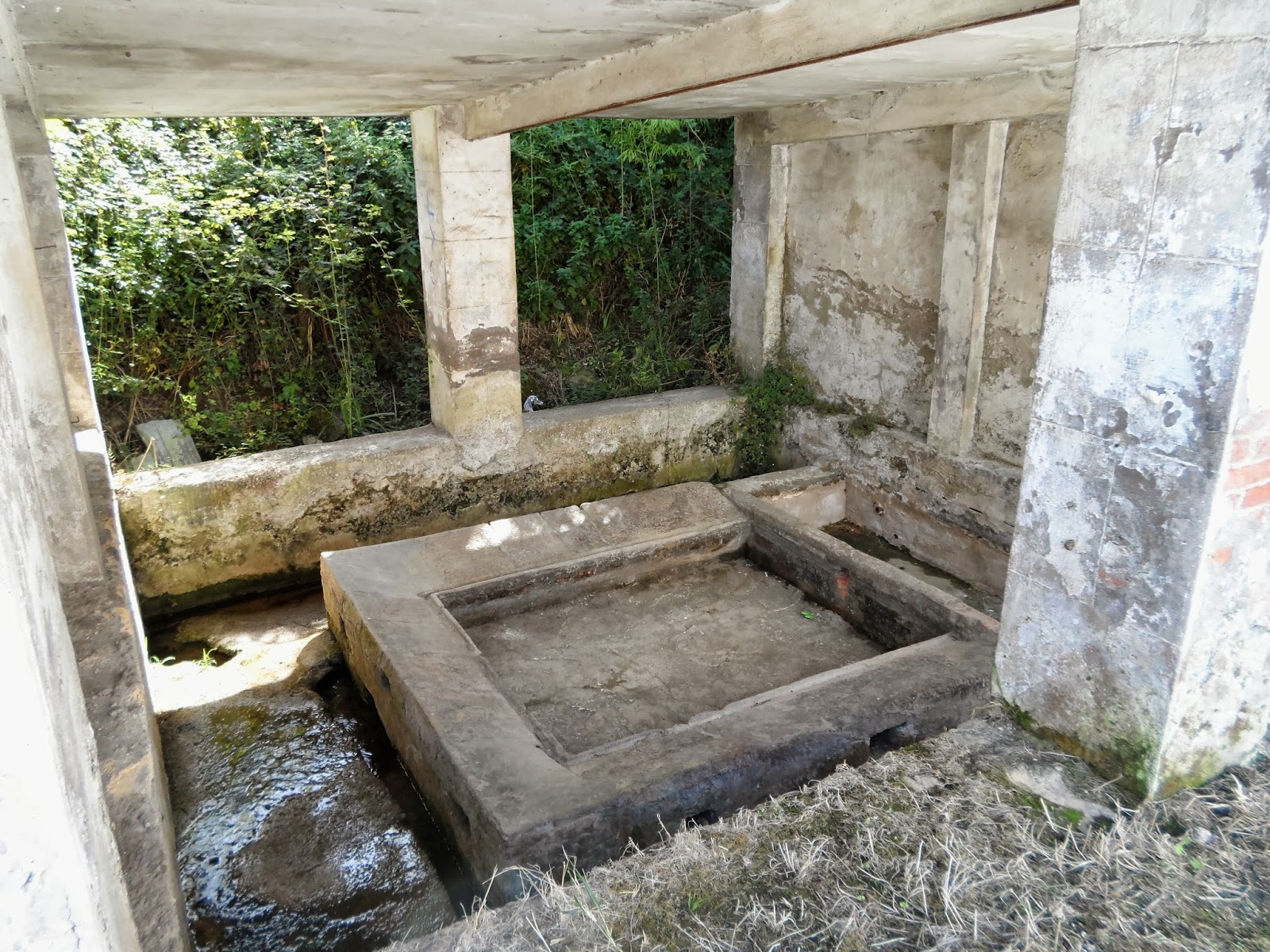
Feliz Cumpleaños, Ramón. Asturians seem to live to a ripe old age.

La Iglesia de San Adriano. 12th century Camino de Santiago pilgrim church.


Mercedes' front door at Las Cepas.

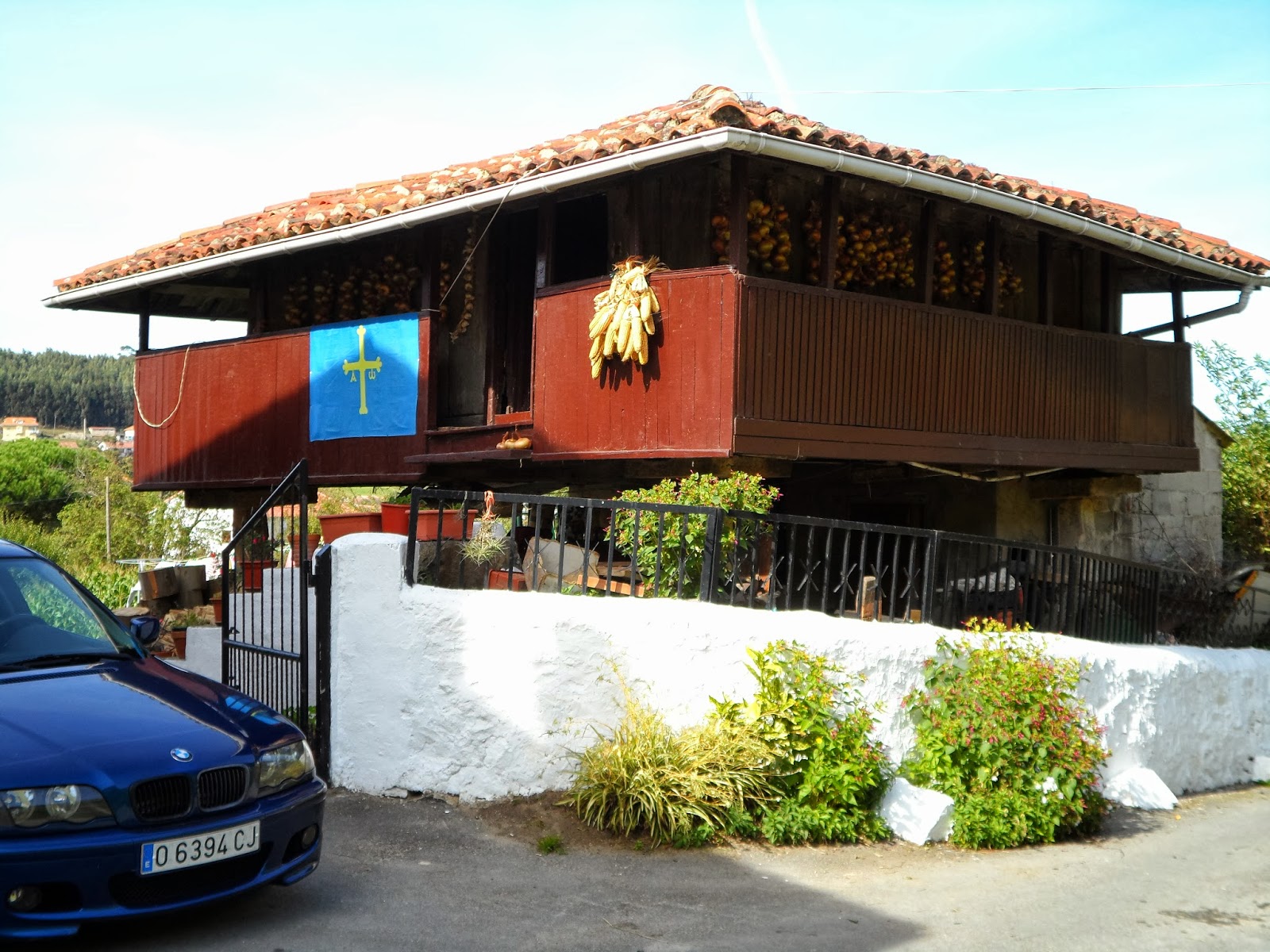
An hórreo in Las Cepas.
The priest's home in Naveces.

La Iglesia de San Román in Naveces.

The priest's home and church.

The Cantabrian Sea, from the Senda Norte (the trail that runs all along the coast).

Even goats need a little time by the ocean.

La Playa de Arnao.

The (unlined and a bit scary on foot) tunnel connecting Arnao with Salinas.

Surfers at la Playa de Salinas.

Las Dunas de Espartal, between Salinas and San Xuan de Nieva.

Garden plots at the base of Gauzón. Farmers have tilled this patch of ground for a thousand years.

"Crisis=Fraud" Painted on a power box in a village along the way.

Though the photo was from the start of the day, it also is a great place to finish the post: the Franciscan's Church in Avilés. It is from the 12th century and is the oldest building in the city. And my favorite.


